
Your phone, your internet use and your home network, in the order that pays off — from a thirty-minute settings audit to GrapheneOS and a Pi-hole.
Free here: the five Quick Wins, the comparison tables and the complete checklist.
Books by James Patrick
The first gets your data out of other people's hands. The second gives it somewhere to go. The third makes sure AI doesn't become the new leak.
Your phone, your internet use and your home network, in the order that pays off — from a thirty-minute settings audit to GrapheneOS and a Pi-hole.
Free here: the five Quick Wins, the comparison tables and the complete checklist.

One server, built properly: hardened Ubuntu, Docker, HTTPS on your own subdomains, then passwords, files, photos, media, search and local AI — with backups, restore drills and monitoring so it survives.
Free here: every code block, ready to copy, and a deeper tutorial for each service.

What happens to everything you tell an AI, how to share less and opt out of training, and how to run AI on your own computer or server — then your own documents, voice and agents.
Free here: every code block, a current robots.txt for AI crawlers and model suggestions.
Leaving Google
The Privacy Diet swaps your browser and search engine. This guide moves everything else — email, calendar, files, photos, passwords and your phone — to ready-made private services, in an order that keeps everything working.
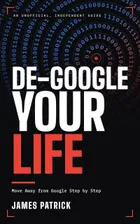
Move Away from Google Step by Step · An unofficial, independent guide
Choose how far to go — a lighter clean-up, most of the way, or no Google account at all. Map what depends on your account, get your data out with Takeout, then move the easy things first and the big ones (email, files, photos, "Sign in with Google") with nothing lost. No server and no command line, with notes for iPhone users along the way.
Free here: the replacement table, kept up to date, and the Takeout checklist, ready to tick off.
Independent: not affiliated with, authorised by, or endorsed by Google LLC.
Going deeper
The Privacy Diet recommends moving your email to an encrypted provider, with Proton Mail as one of its two picks. This guide is for readers who choose Proton and want to go further with it once they've made that switch.

An unofficial, independent guide
What Proton Mail protects and what it doesn't, choosing a plan, and leaving Gmail without losing anything. Then everyday use, aliases and Hide-My-Email, your own domain, Proton Mail Bridge, PGP and hardening your account, finishing with a 30-day plan, a settings checklist and a DNS record template.
Independent: not affiliated with, authorised by, or endorsed by Proton AG.
Going deeper
The same Proton account also holds a password manager, encrypted storage, a calendar and a VPN. This guide is for readers who want to use them properly.
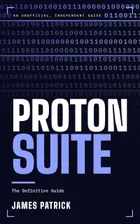
An unofficial, independent guide
What each app protects and what it doesn't, choosing a plan, and moving in from Google, Apple, Microsoft or another password manager. Pass, Authenticator, Drive, Docs and Sheets, Calendar and VPN in depth, a short look at Wallet, Lumo and Meet, then families, a 30-day plan and two checklists.
Independent: not affiliated with, authorised by, or endorsed by Proton AG.
Festina Lente — Make Haste Slowly
A gradual, sustainable approach to reducing what you leak online — built through habit, one change at a time. Plus the bare-bones self-hosting groundwork most guides skip.
5 quick wins · 17 comparison tables · no tracking, no cookies, no CDN
I want to introduce a concept that will frame everything else in this guide: the privacy diet.
The goal of this guide is not to make you invisible. That ship has largely sailed for most of us, and the pursuit of total anonymity is its own kind of trap — It's exhausting and if you start with that as the goal it's very likely you'll be nihilistic about the possibilities in no time. The goal I want to put forth is something more achievable and more sustainable: a gradual, deliberate reduction of your exposure, built through habit piece by piece.
Think about how long-term weight loss actually works. It doesn't work through fad diets and rarely through white-knuckle willpower. It works through small, consistent changes — swapping one habit for a slightly better one, building momentum over time, and not beating yourself up when you slip. Slowly improving your lifestyle to help achieve the goal. Your online privacy works exactly the same way.
Replace Google Search with a private alternative. Switch your messaging app. Change one setting on your router. Each of these changes is minor. But over six months, they compound. The algorithm that knows you today will know you less next year. Your data will be in fewer hands. Your attack surface — the amount of you that is exposed to the world — will have quietly, permanently shrunk.
Where it applies
Each layer builds on the one before it. You don't need to finish one to start the next.
Your Phone
Where most of your data leaks happen, and the most impactful place to start.
Your Internet Use
Browsers, search, email, messaging and VPNs — and what each one gives away.
Your Home Network
The router you haven't touched since it was installed, and the DNS layer above it.
Owning Your Stack
Replacing cloud services with hardware you own, in a location you control.
Tutorials
The groundwork both books assume — Ubuntu Server, SSH, Docker — and a deeper tutorial for every service in Be Your Own Cloud.
Test Your Browser, and Read the Results Properly
Three checks for the browser you use every day — blocking, fingerprinting and leaks around a VPN — what a good result looks like for Brave, Firefox and Mullvad Browser, and what to change when one fails.
Google Photos to Immich, Dates and Albums Intact
Move a whole Google Photos library into your own Immich server: a Photos-only Takeout, one merged folder, immich-go with a dry run first, and the checks to make before you delete anything from Google.
Encrypted DNS on Your Phone, Everywhere You Go
Android's Private DNS and an iPhone DNS profile, set up in fifteen minutes: which resolver now that Mullvad's is closing, how to check it works, and how it fits with a Pi-hole at home.